
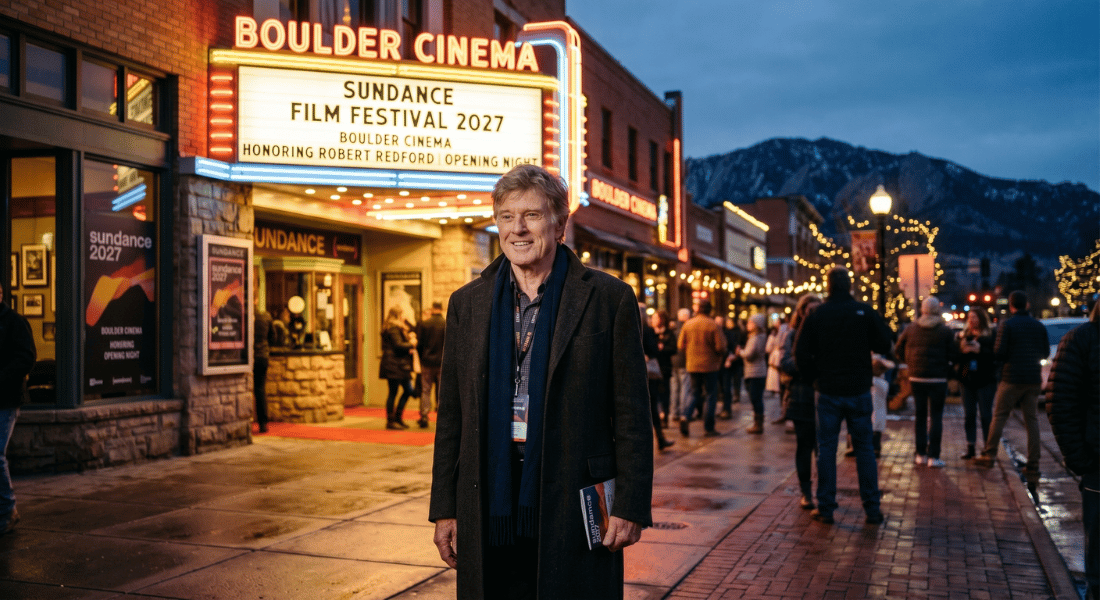
The Sundance Film Festival is making history with its bold 2027 relocation to Boulder, Colorado. This iconic Sundance Film Festival move brings unprecedented opportunities and logistical challenges to the Front Range. As Boulder prepares to host the Sundance Film Festival for the first time, city planners tackle housing shortages, transportation overhauls, and infrastructure demands that will transform this mountain community into a global cinematic destination.
The cinematic world held its breath in anticipation last year when the Sundance Institute announced a seismic shift: after four decades nestled in the snowy embrace of Park City, Utah, the iconic Sundance Film Festival would be relocating to Boulder, Colorado, beginning in 2027. The news, officially confirmed by the Institute, sent ripples of excitement through Boulder’s vibrant arts community and across the Front Range. Yet, beneath the celebratory veneer, a more practical, albeit formidable, challenge quickly emerged: how will a city renowned for its small-town charm and progressive planning manage the logistical realities of hosting one of the world’s premier film festivals?
As a senior urban affairs journalist, my focus isn't just on the glitz and glamour, but on the intricate urban planning and infrastructural demands placed upon a community by an event of this magnitude. Boulder, with its unique blend of outdoor recreation, academic prowess, and a fiercely protected quality of life, faces an unprecedented test. The inaugural 2027 festival, scheduled for January 21–31, will transform the city and its surrounding counties into a global cinematic hub, drawing tens of thousands of visitors, filmmakers, and industry professionals. This feature will delve into the proactive—and sometimes controversial—steps Boulder and its neighbors are taking to brace for the influx, analyzing the immediate logistical burden on everything from housing to transportation.
The Inaugural Shift: A New Alpine Stage, A Familiar Urban Challenge
The move from Park City, a ski town that had grown accustomed to the annual festival churn, to Boulder represents a significant cultural and operational pivot. While both share a stunning mountain backdrop and a commitment to independent spirit, Boulder's urban fabric is distinctly different. It’s a university town, a tech hub, and a haven for outdoor enthusiasts, but not historically a major events city on this scale. The excitement is palpable; the festival promises a significant economic boon and unparalleled cultural exposure for Boulder. However, the sheer volume of attendees—even if a fraction of Park City’s peak—demands a comprehensive reimagining of local infrastructure, particularly concerning accommodation and transit.
The city's leadership, along with Boulder County, has been swift to acknowledge the immense undertaking. The challenge isn't merely about finding venues for screenings and panels, but about ensuring that the city can physically and logistically absorb such a temporary population surge without buckling under the pressure. This means innovative approaches to housing, a radical overhaul of transit planning, and careful communication with a community that values its tranquility.
Housing the Horde: The STR Conundrum and Legislative Leaps
Perhaps the most immediate and complex logistical hurdle for Boulder is accommodation. The city already grapples with a notoriously tight and expensive housing market, coupled with some of the strictest short-term rental (STR) ordinances in the nation. For years, Boulder has limited STRs primarily to owner-occupied properties, aiming to preserve long-term housing stock and neighborhood character. The arrival of Sundance, however, necessitated an urgent and aggressive legislative pivot.
In a bold move, the City of Boulder introduced the "Festival Lodging Rental License," a temporary measure designed to significantly expand the available STR inventory during the festival period. This new license, detailed on the City of Boulder's official portal, temporarily allows both homeowners and long-term renters to list their primary residences for up to 29 days during the festival. This is a dramatic departure from existing regulations and signals the city's commitment to hosting the event successfully.
Key requirements for the Festival Lodging Rental License include:
- The property must be the applicant's primary residence.
- Renters must have explicit written permission from their landlord to participate.
- A robust safety inspection and licensing process is required to ensure compliance with city codes.
- Occupancy limits are strictly enforced based on the property's size and safety standards.
- All applicable city and state lodging taxes must be collected and remitted.
- The license is temporary, valid only for the specified festival dates.
Similar legislative adjustments are being considered or have been enacted in neighboring towns like Superior and Lyons, which are expected to serve as crucial overflow accommodation hubs. These communities, while smaller, offer additional lodging capacity and are connected to Boulder via regional transit corridors.
However, this legislative flexibility is not without friction. Many properties in Boulder, particularly within planned communities, are governed by strict Homeowners Associations (HOAs) or land-lease agreements that explicitly prohibit short-term rentals, regardless of city approval. This creates a complex legal and social landscape where a city-sanctioned license might still be overridden by private covenants. Residents are grappling with whether to risk HOA penalties for the lucrative festival rental market, and legal experts are anticipating potential disputes. The balance between municipal needs and private property rights will be a defining tension in the lead-up to 2027.
Navigating the Rockies: Traffic and Transit Challenges
Boulder's geographic setting, nestled against the dramatic Flatirons, contributes to its beauty but also limits its major arterial roads. The prospect of tens of thousands of additional visitors converging on a city already experiencing daily congestion on key routes like US 36 (the main artery to Denver), CO 7 (connecting to the Peak to Peak Highway), CO 93 (linking to Golden), and CO 119 (leading to Longmont) presents a formidable challenge. Without aggressive intervention, complete gridlock is a very real threat.
Boulder County has taken a proactive stance, pushing for a radical shift towards car-free travel during the festival. Their Sundance Information & Transit Guide, already in development, emphasizes a multi-modal strategy:
- Expanded Public Transit: Collaboration with RTD (Regional Transportation District) is underway to significantly increase bus frequency and introduce dedicated festival routes connecting Boulder with Denver International Airport, downtown Denver, and surrounding communities like Superior, Louisville, and Longmont.
- Dedicated Shuttle Networks: A comprehensive shuttle system is planned to ferry attendees between festival venues, major parking hubs located on the outskirts of Boulder, and satellite lodging areas. This aims to minimize private vehicle use within the city core.
- Shared Mobility Solutions: The city plans to leverage and expand its existing bike-share programs, e-scooter networks, and incentivize ride-sharing services, creating a dense web of last-mile transportation options.
- Park-and-Ride Strategy: Designated large-scale park-and-ride facilities outside the immediate Boulder area will be crucial, offering secure parking with direct shuttle access to festival venues.
The success of these initiatives hinges not only on their implementation but also on a significant cultural shift among festival-goers, many of whom are accustomed to the convenience of personal vehicles. Extensive public awareness campaigns and seamless integration of transit information will be critical to encouraging adoption and preventing a vehicular nightmare.
Balancing Ethos and Event: A Forward Look
Boulder’s journey to host the 2027 Sundance Film Festival is more than just a logistical exercise; it’s a profound test of its urban character. Can a city that prides itself on environmental stewardship, community intimacy, and thoughtful growth successfully embrace the global scale and temporary chaos of a major international event? The proactive legislative steps regarding STRs and the ambitious transit plans demonstrate a willingness to adapt, but the road ahead is fraught with potential friction.
The success of the inaugural Boulder Sundance will be measured not just in ticket sales or celebrity sightings, but in how effectively the city preserves its unique ethos while delivering a world-class festival experience. It’s a delicate balancing act, one that could redefine how mid-sized, amenity-rich cities approach mega-events. If Boulder can pull it off, it will not only solidify its place on the global cultural map but also offer invaluable lessons in sustainable urban festival hosting for cities worldwide.
Related reading: Sundance 2027 Boulder details